Standards & Best Practice
Confidentiality in Legal Deliveries: What Good Couriers Do
Confidentiality isn’t a “bonus” in legal deliveries , it’s the baseline. Legal documents and case-related materials often contain sensitive information, and how they are handled during collection, transport, and delivery can affect privacy, trust, and professional risk.
Why confidentiality matters in legal courier work

- Contracts and agreements
- Court documents and case files
- Conveyancing paperwork
- Estate and trust documentation
- Confidential client information
- Unauthorised access to information
- Missing documents or disputes about what was delivered
- Administrative delays and repeated trips
- Damage to client trust and professional reputation
- Who can access the materials
- How the materials are handled
- How handovers are confirmed and recorded
Professional couriers treat every delivery as confidential by default
- No unnecessary discussions about the delivery
- No sharing delivery details with unrelated parties
- No casual handling (e.g., leaving documents exposed in a vehicle)
- No informal “drop and go” handovers without confirmation
Secure packaging is expected and encouraged

- Sealed in an envelope or document wallet
- Clearly labelled (recipient + reference number)
- Protected from bending, moisture, and handling damage
- Double-enveloping (inner sealed envelope inside an outer envelope)
- Tamper-evident sealing (where suitable)
- Clear marking of “ORIGINALS” when applicable
Limited access and controlled handling
- Assigning clear responsibility per delivery
- Avoiding unnecessary “handoffs” between riders/drivers
- Keeping documents secured during transit (not left visible)
- Ensuring the person collecting and the person delivering are accountable
Clear delivery instructions reduce unnecessary exposure
Many confidentiality issues come from confusion at the destination.
- Who exactly should receive the documents
- Which department or reception point is correct
- Whether the recipient must sign personally or reception can receive
- Any access instructions (floor, suite, contact person)
This prevents documents being passed around while people ask, “Who is this for?”
Proof of Delivery (POD) is part of confidentiality, not just tracking
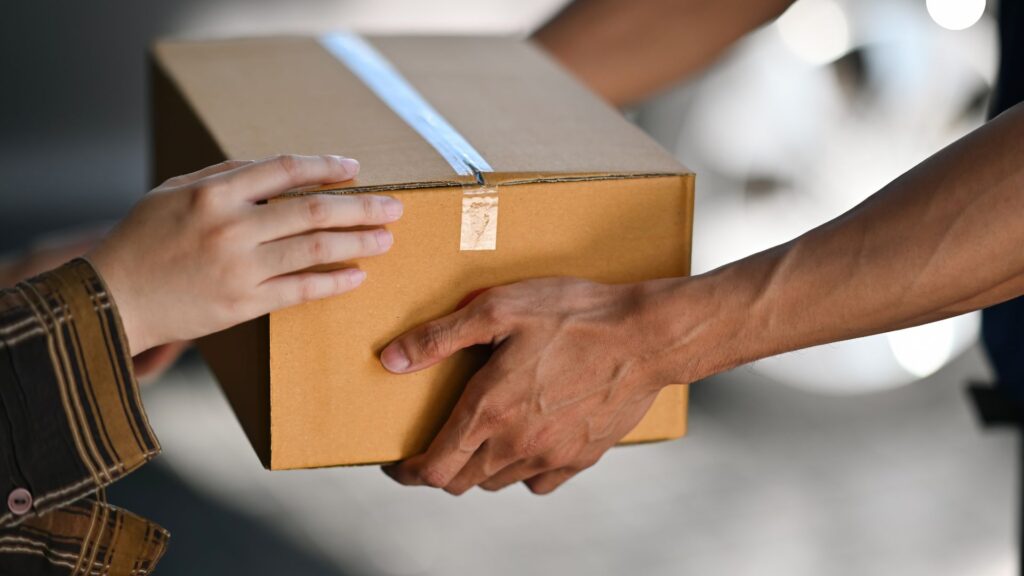
POD is not only about “it arrived.” It creates accountability.
A good courier provides POD details such as:
- Receiver name (or department)
- Signature confirmation (where required)
- Timestamp
- Delivery note (e.g., “Handed to Legal Admin”)
This protects confidentiality because it reduces follow-ups like:
“Who received it?”
“Where was it left?”
“Did it reach the right person?”
Good couriers avoid leaving documents unattended
A reputable courier avoids:
- Leaving documents on a desk without confirmation
- Sliding envelopes under doors
- Leaving packages with someone “random” without instruction
- Dropping documents without a clear recipient point
If a destination is closed or the contact is unavailable, a good courier will follow the agreed process (call the sender, return to office, or reattempt depending on policy).
Couriers communicate discreetly and professionally
A good courier will:
- Share only the necessary information for the job
- Use clear, short updates (pickup confirmed, en route, delivered)
- Avoid sending sensitive details in public or group messages
- Keep phone calls focused and discreet
Good couriers understand "legal environments"
- Tight deadlines
- Multiple offices and reception points
- Sensitive documents handled daily
- Staff who need speed and clarity
- Navigate professional reception procedures
- Reduce confusion on delivery
- Stay calm and efficient under pressure
- Keep the process structured and predictable
Simple internal controls make a big difference
- Confirming recipient details before dispatch
- Labelling and referencing deliveries clearly
- Confirming urgency levels (same-day vs express)
- Capturing delivery confirmation consistently
Consistency is what prevents “one-off mistakes” from turning into routine problems.
Looking for a courier that handles your documents with care?
We treat every legal delivery as confidential , with proper handling, clear communication, and POD on every run.
Book a secure delivery
Same-day and scheduled options available across Gauteng, Western Cape, and KwaZulu-Natal.