
POPIA Compliance and Legal Document Delivery: What South African Businesses Need to Know
When an attorney hands a sealed envelope containing a client’s financial statements to a courier, POPIA applies. When an HR manager sends employee disciplinary records via a delivery service, POPIA applies. When a conveyancer dispatches a bond registration batch containing identity documents, income details, and property valuations, POPIA applies.
The Protection of Personal Information Act (Act 4 of 2013) fully operative since July 2021 governs the processing of personal information in South Africa. Physical document delivery is processing. The courier who carries documents containing personal information is an operator under POPIA. And the business that instructs that courier is a responsible party with legal obligations that follow from that classification.
Most South African businesses that use courier services for legal documents have not thought carefully about this. This guide explains what POPIA requires, where the risks lie in document delivery, what a POPIA-aware courier does differently, and how to structure your delivery arrangements to manage your compliance obligations correctly.
Disclaimer: This article provides general guidance on POPIA and document delivery. It does not constitute legal advice. For advice specific to your organisation’s compliance obligations, consult a qualified POPIA practitioner or your information officer.
POPIA in the Context of Physical Document Delivery
POPIA regulates the processing of personal information and processing is defined broadly. It includes collection, receipt, recording, organisation, storage, updating, distribution, and destruction of personal information. Physical delivery of a document containing personal information is distribution. It falls squarely within POPIA’s scope.

Two roles are central to understanding your obligations:
- Responsible party. The entity that determines the purpose and means of processing personal information. In a document delivery context, this is your organisation the law firm, HR department, conveyancer, or business that instructs the courier to carry the documents.
- An entity that processes personal information on behalf of a responsible party under a contract or mandate. The courier carrying your documents is an operator under POPIA.
This distinction matters because POPIA imposes specific obligations on responsible parties regarding how they select and instruct operators including couriers. A responsible party cannot outsource its compliance obligations to an operator. If the courier mishandles documents containing personal information, the responsible party shares exposure to that failure.
The core principle: Choosing a courier that handles personal information carelessly is not just an operational risk. Under POPIA, it is a compliance risk for your organisation. The responsible party is accountable for ensuring operators process personal information with equivalent protections.
The Eight POPIA Conditions and Their Relevance to Document Delivery
POPIA establishes eight conditions for lawful processing of personal information. Not all eight apply with equal force to document delivery, but several are directly relevant. The table below maps each condition to its courier delivery context:
POPIA Condition | What It Requires | Delivery Context |
Accountability | Responsible party must ensure compliance | You are responsible for how your courier handles documents |
Processing limitation | Process only for specific, legitimate purpose | Delivery for stated legal purpose no secondary use of document content |
Purpose specification | Purpose must be defined before processing | Delivery instruction defines the purpose; courier acts only on that instruction |
Further processing limitation | No incompatible secondary processing | Courier must not read, copy, or use document content for any purpose |
Information quality | Keep personal information accurate and complete | Documents must be delivered intact and unaltered |
Openness | Data subjects have right to know processing occurs | Relevant where clients have not been informed their documents will be couriered |
Security safeguards | Implement appropriate technical and organisational measures | Physical security of documents in transit is the primary delivery obligation |
Data subject participation | Data subjects can access and correct their information | Less directly relevant to courier delivery, but chain-of-custody supports this right |
Of these eight, security safeguards and accountability are the conditions most directly engaged by physical document delivery. They are where the most significant compliance risk sits and where the choice of courier matters most.
POPIA Risk Matrix: Document Delivery Scenarios
Different delivery situations carry different levels of POPIA risk. The table below identifies common scenarios, their risk classification, and the appropriate mitigation:

Delivery Scenario | Risk Level | POPIA Mitigation |
Unsealed documents delivered by general courier with no POD | High | Seal all documents; use legal courier with signed named POD on every delivery |
Documents left at reception without named recipient confirmation | High | Instruct named delivery only; use courier with named recipient POD policy |
Documents sent via general email without encryption | High | Physical delivery with chain-of-custody; or encrypted digital transmission with access controls |
Sealed documents delivered by legal courier with signed named POD | Low | Standard legal courier arrangement document content protected throughout transit |
Sensitive HR records (disciplinary / medical) in transit | Medium | Double-seal packaging; named delivery only; consider urgent same-day to reduce transit exposure |
FICA / identity documents in conveyancing batch | Medium | Legal courier with chain-of-custody; batch cover sheet with document inventory |
Documents delivered to wrong address without notification | High | Courier must have verified address confirmation policy; proactive notification if delivery issue arises |
Courier staff accessing document contents | High | Use operator that trains staff on confidentiality; include confidentiality terms in operator agreement |
The Operator Agreement: What POPIA Requires From Your Courier Relationship
Section 21 of POPIA requires that where a responsible party uses an operator to process personal information, the operator must be governed by a written contract or other legally binding agreement. This is a compliance requirement not a best practice recommendation.
For document delivery, this means your relationship with your courier should be formalised in a way that addresses POPIA obligations. The agreement whether a formal contract, a terms of service document, or a letter of engagement should cover:
Operator Requirement | What It Covers in Practice | Priority |
Confidentiality obligation | Courier staff may not access, read, copy, or disclose document contents | Essential |
Security safeguards | Physical security of documents in transit sealed packaging, controlled handover, no unattended delivery | Essential |
Processing limitation | Courier processes (delivers) documents only for the stated purpose no secondary use | Essential |
Signed Proof of Delivery | Named recipient confirmation on every delivery evidences controlled handover | Essential |
Notification of security breach | Courier must notify responsible party immediately if documents are lost, damaged, or delivered incorrectly | Required |
Sub-operator restriction | Courier may not pass documents to an unauthorised third party without prior written consent | Required |
Document retention / return | What happens to documents if delivery fails return to sender, secure storage, destruction protocol | Required |
Staff training confirmation | Courier staff are trained on confidentiality handling and POPIA obligations | Recommended |
Practical note: For many small to medium practices, a formal POPIA operator agreement with a courier does not need to be a lengthy legal document. A clear written terms of engagement that addresses the eight points above, signed by both parties, satisfies the Section 21 requirement for most document delivery arrangements.
What a POPIA-Aware Legal Courier Does Differently
Most general couriers have not thought about POPIA in the context of the documents they carry. A specialist legal courier operates with document handling standards that align with POPIA requirements as a matter of operational baseline not as a compliance add-on.
Here is how Law Couriers handles personal information in transit:
- Named recipient delivery only. Documents are delivered to the named individual or an authorised representative not left at a front desk, dropped in a postbox, or handed to an unidentified third party. Named delivery is the primary safeguard against documents containing personal information reaching the wrong person.
- Signed Proof of Delivery on every job. Every delivery generates a signed POD recording the recipient’s name, signature, and time of receipt. This is both a service standard and a POPIA accountability record evidence that the document reached the intended recipient only.
- Chain-of-custody documentation. From the moment of collection to the moment of delivery, every handover point is documented. This record supports the responsible party’s accountability obligation and provides an audit trail in the event of a query or complaint.
- Confidential handling as operational standard. Law Couriers staff are instructed not to open, read, copy, or discuss the contents of documents in their care. Documents are handled as confidential regardless of whether they are sealed.
- Proactive communication on delivery failures. If a delivery cannot be completed recipient not available, incorrect address, or refusal Law Couriers notifies the client immediately. Documents do not remain in transit unaccounted for.
- No unattended delivery. Documents containing personal information are never left unattended at a premises. If the named recipient is unavailable, the document is returned to the client or held securely pending re-delivery instructions.
What Your Business Should Do Now
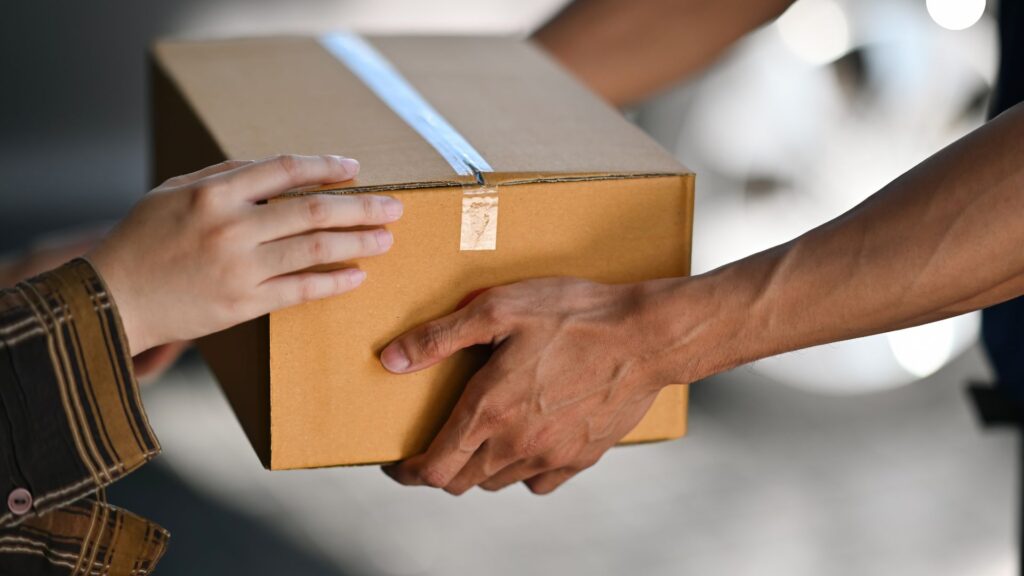
If your organisation regularly sends legal documents containing personal information via courier, these four steps bring your delivery arrangement into alignment with POPIA:
- Audit your current courier arrangement. Does your existing courier issue signed named PODs? Do they have a documented confidentiality policy? Is there a written agreement governing how they handle personal information? If the answer to any of these is no, your current arrangement carries POPIA risk.
- Formalise the operator relationship. If you use a legal courier regularly, ensure the engagement is documented even informally in a way that addresses the Section 21 operator requirements outlined above. Your information officer should be involved in this process.
- Brief your staff on document preparation. POPIA risk in delivery often starts before the courier arrives. Documents should be sealed before handover. Envelopes should be addressed to a named individual. Delivery instructions should include the recipient’s direct phone number to facilitate named confirmation.
- Choose a courier that treats confidentiality as a baseline. The simplest POPIA mitigation available to any South African business sending legal documents is to use a courier that handles documents with the same confidentiality standards you would apply internally. Law Couriers was built for exactly this.
FREQUENTLY ASKED QUESTIONS
Does POPIA apply to the physical delivery of paper documents, or only to digital data?
POPIA applies to personal information regardless of the medium in which it is held or transmitted. A paper document containing an individual’s identity number, financial details, medical information, or employment records is subject to POPIA in exactly the same way as a digital file. Physical delivery of such documents is processing under the Act.
What is the penalty for a POPIA breach involving document delivery?
The Information Regulator can impose administrative fines of up to R10 million for contraventions of POPIA. Criminal sanctions including imprisonment apply in certain cases. Beyond regulatory penalties, a data breach involving personal information can trigger civil liability and serious reputational harm. The practical exposure for most businesses from a document delivery breach is most likely to materialise as client trust damage and professional liability rather than regulatory fine but both are real risks.
Does our courier need to be registered with the Information Regulator?
Operators including couriers processing personal information on behalf of responsible parties are not required to register with the Information Regulator. Registration obligations under POPIA apply to responsible parties in certain categories. However, the operator relationship must still be governed by a written agreement as required by Section 21, and operators must implement appropriate security safeguards.
We use an internal runner to deliver documents. Does POPIA still apply?
Yes. An internal employee carrying documents containing personal information is processing that information on behalf of the organisation. The organisation remains the responsible party and is accountable for the handling standards applied including whether documents are sealed, whether delivery is confirmed to a named recipient, and whether a delivery record is kept. The POPIA obligations do not disappear because the delivery is made internally.
How does Law Couriers handle a situation where documents are lost or delivered incorrectly?
Law Couriers notifies the client immediately in the event of a failed, incorrect, or compromised delivery. The incident is documented and the client receives a full account of what occurred and what steps were taken. Where a POPIA-reportable breach may have occurred, the responsible party the client is informed promptly so they can fulfil their own notification obligations to the Information Regulator and affected data subjects if required.
Looking for a courier that handles your documents with care?
We treat every legal delivery as confidential , with proper handling, clear communication, and POD on every run.
Book a secure delivery
Same-day and scheduled options available across Gauteng, Western Cape, and KwaZulu-Natal.